The cost of building and the cost of insuring
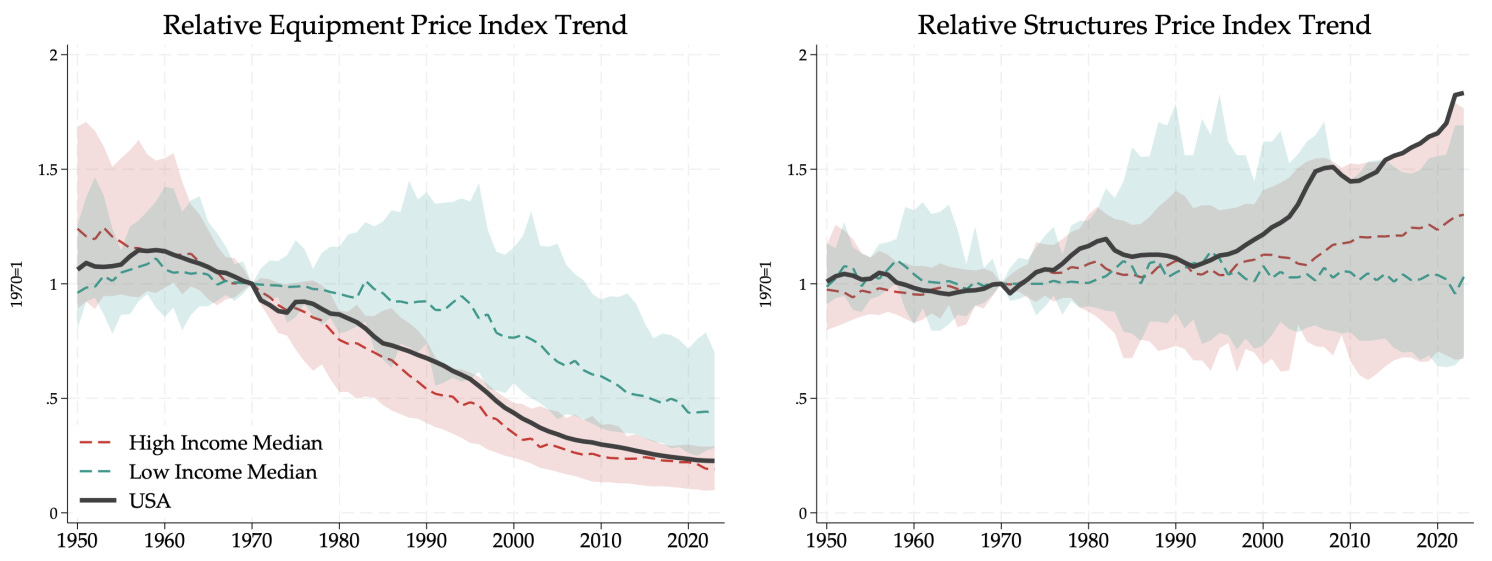
A new VoxEU column argues that declining construction productivity has fueled an 80% increase in the relative price of US structures since 1970, offsetting the benefits of continued declines in the cost of equipment. “Construction productivity is no longer a sector-specific concern”, they say, positing more expensive structures as a key drag on economy-wide growth. The authors don’t cleanly distinguish between land costs and construction cost inputs, so their model includes the combined effects of land use regulations and pure construction costs on the final user cost of real estate. While endorsing land use regulation reform, they point to reforms to building codes and investigating other construction cost inputs as the neglected next frontiers (a view widely shared among professional YIMBYs).
Meanwhile, insurance costs have also been a hot discourse topic, especially in housing and real estate. Some of this is pure money illusion: The average price level of all goods and services increased ~30% since 2020 because of the largest coordinated fiscal and monetary policy stimulus since the New Deal, so it’s easy to find a trend piece about almost any product up by 20% to 40% in nominal dollars. Still, Florida had a real problem with homeowners insurance, reportedly originating 76% of US insurance lawsuits from just 9% of US homeowners. After recent liability and tort reforms, insurance firms and Florida regulators are reporting a sharp drop in litigation costs and premium growth. Every insurance market is different, but there’s never a bad time to identify and reform rent-seeking that threatens housing affordability.
- https://cepr.org/voxeu/columns/cheaper-machines-costlier-buildings-drag-long-run-growth#:~:text=The%20relative%20price%20of%20structures%20in%20the%20US%20is%20now%2080%25%20higher%20than%20its%201970%20level.
- https://cepr.org/voxeu/columns/cheaper-machines-costlier-buildings-drag-long-run-growth#:~:text=regulatory%20architecture%20around-,building%20codes,-%2C%20and%20to%20how
- https://substackcdn.com/image/fetch/$s_!7WZF!,f_auto,q_auto:good,fl_progressive:steep/https%3A%2F%2Fsubstack-post-media.s3.amazonaws.com%2Fpublic%2Fimages%2F1a48c098-6832-49cc-aad7-cd309a3c15cf_1492x561.webp
- https://x.com/aarmlovi/status/1831334991277555718?s=20
- https://fred.stlouisfed.org/graph/?g=1WP8V
- https://x.com/aarmlovi/status/2063988036610707801?s=20
- https://www.cnbc.com/2026/06/08/usaa-to-return-nearly-1-billion-to-florida-members-as-legal-reforms-help-lower-insurance-costs.html